
Zootechnics
- Home
- Application sectors
- Zootechnics
Bentivogli produces gaskets for zootechnical applications, such as butterfly valves made from FDA-certified nitrile compound for the food industry.
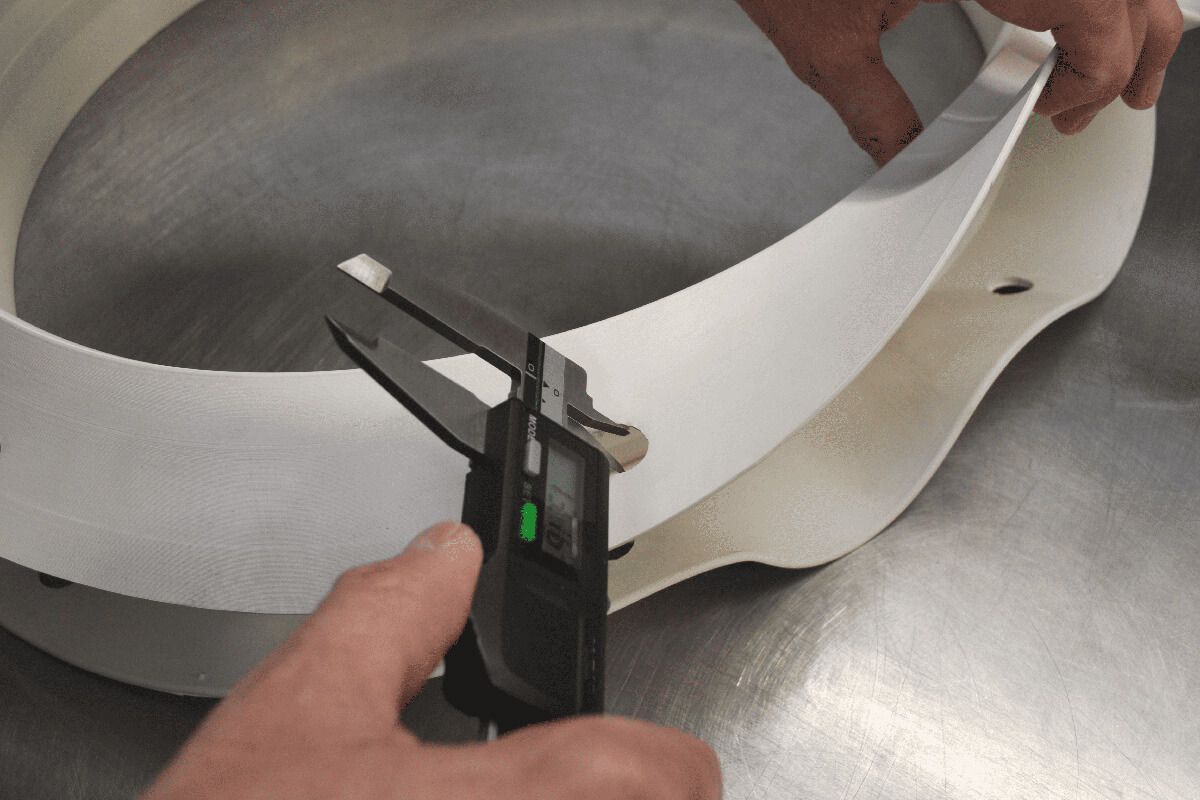
Some of our finished products
Products

Materials table
| Chemical terminology | Acronym | Trade name | Characteristics | Operating temperature | Shore A hardness | Application | Chemical resistance |
|---|---|---|---|---|---|---|---|
| Ethylene Propylene Diene Monomer | EPDM | Dutral | Excellent resistance to heat, ozone and high temperatures. High resistance to permanent deformation. Excellent resistance to water and steam up to 150°C | - 80°C ÷ + 150°C | 40 SH ÷ 90 SH | Gaskets, membranes, belts, bumpers, rollers, wheels, bellows, suction cups, hoses, etc. | Good resistance to water and glycols, to chemical agents, and to oxidation. Excellent resistance to steam up to 150°C. |
| Fluoroelastomer | FPM/FKM | Viton | Excellent resistance to chemical agents, lubricants, heat and flame; exceptional performance against permanent deformation (compression set). Outstanding behavior in ozone and UV radiation | - 20°C ÷ + 280°C | 55 SH ÷ 80 SH | Highly specialized products for the mechanical, chemical, pharmaceutical industries, etc. | Specific chemical agents for which excellent resistance is ensured across a wide range of temperatures include: aliphatic, chlorinated, and aromatic hydrocarbons; fuels; mineral and vegetable oils and fats; and hydraulic fluids in general. |
| Acrylonitrile-Butadiene Copolymer (NBR) | NBR | Nitrile or Oil-resistant | Good resistance to oils. Good physical−mechanical properties. From good to excellent impermeability to air and gases | - 40°C ÷ + 130°C | 30 SH ÷ 80 SH | Oil seals, gaskets, bellows, rollers, bushings, membranes, valves, suction cups, drive belts, flexible hoses, hydraulic seals, V-belts, cable jacketing | Good resistance to oils, mineral, vegetable, and animal fats, hydrocarbons, and gases. |
| Acrylonitrile Butadiene Copolymer (NBR) | NBR | Conductive nitrile | Good resistance to oils. Good physical-mechanical properties. From good to excellent impermeability to air and gases. | - 30°C ÷ + 170°C | 50 SH ÷ 90 SH | Cleaning machinery (floor scrubbers, pressure washers, etc.), automotive drive belts, flexible hoses, O-rings, oil seals, gaskets, V-belts, roller coverings, and cables. | Good resistance to oils, mineral, vegetable, and animal fats, hydrocarbons, and gases. |
| Styrene-Butadiene Copolymer | SBR | Styrene | Good physical-mechanical properties. Good abrasion resistance. Good resistance to permanent deformation. | - 40°C ÷ + 100°C | 42 SH ÷ 92 SH | Seals, buffers, belts, sleeves, etc. | Good resistance to certain types of freon, glycols, and brake fluids. |
| Hydrogenated Acrylonitrile Butadiene | HNBR | Therban | Excellent physical-mechanical properties. Outstanding resistance at temperatures up to 150°C. Extremely high resistance to permanent deformation and abrasion | - 40°C ÷ + 150°C | 40 SH ÷ 90 SH | Automotive sector, HVAC sector (Heating, Ventilation and Air Conditioning) | Excellent resistance to oils, mineral, vegetable, and animal fats, hydrocarbons, gases, and certain types of freon. |
| Polyisoprene | NR | Natural rubber | Excellent physical-mechanical properties. Very good elastic performance. Outstanding abrasion resistance | - 70°C ÷ + 80°C | 22 SH ÷ 90 SH | Shock absorbers, engine mounts, joints, hoses, gaskets and membranes | Moderate resistance to seawater and mediumconcentration acids. |
| Ethylene Acrylate | AEM o EAM | Vamac | Excellent air and gas impermeability. Low elastic yield. Outstanding resistance to oils up to 170°C and to heat. Low values of permanent deformation even at high temperatures | - 40°C ÷ + 180-200°C | 50 SH ÷ 80 SH | Radiator hoses, sealing rings, rubber-to-metal overmolded parts (anti-vibration mounts, buffers, etc.) | Excellent resistance to aliphatic oils, oxygen, ozone, weathering agents, and heat. Resistance to high temperatures. |
| Polychloroprene | CR | Neoprene | Good resistance to ozone and seawater. Good flame resistance and possible self extinguishing properties. Good resistance to animal and vegetable fats | - 20°C ÷ + 120°C | 40 SH ÷ 85 SH | Hoses, membranes, gaskets, construction supports, suction cups, etc. | Good resistance to fats, ozone, sunlight, weathering, flames, and various types of freon. |
| Polymethyl Vinyl Siloxane | VMQ | Silicone | Insensitivity to thermal variations. Excellent electrical insulation, with appropriate production processes: non-toxicity and the possibility of achieving electrical and thermal conductivity grades | - 60°C ÷ + 200°C | 30 SH ÷ 80 SH | Sealing gaskets, food- grade gaskets, housings and connectors, bellows and boots, special series for high-temperature exposure, etc. | Good resistance to water and aqueous solutions, exposure to atmospheric agents, ozone, and UV rays, as well as to vegetable, animal oils, and glycols. |
| Trifluoropropyl Methyl Vinyl Polysiloxane | FVMQ | Fluorosilicone | Characteristics very similar to those of silicone but with superior chemical resistance to lubricating oils such as M15, etc. | - 50°C ÷ + 300°C | 30 SH ÷ 80 SH | Components for the mechanical, chemical, and pharmaceutical sectors. Seals resistant to fuels, oils, and lubricants | Good resistance to aliphatic hydrocarbons, aromatic hydrocarbons, mineral oils, ozone, and UV rays. Fair resistance to gasoline. |
| Polyurethane | PU | Urepan, Vulkollan and Adiprene | Exceptional resistance to abrasion and tearing. Excellent mechanical properties (tensile strength and elongation). Good impermeability to air, many gases, and oils. | - 30°C ÷ + 100°C | 60 SH ÷100 SH | Coatings for rollers, wheels, pulleys, etc. | Good resistance to hydrolysis, saline solutions, and seawater. |
| Polyepichlorohydrin | ECO | Herclor | Good resistance to ozone and seawater. Good flame resistance and possible self-extinguishing properties. Good resistance to animal and vegetable fats. | - 40°C ÷ + 160°C | 30 SH ÷ 80 SH | Seals for washing machines, refrigerators, cars, etc. | Good resistance to oils, mineral, vegetable, and animal fats, as well as glycols. |